
A family crisis is not the same as a business crisis
If you’re a small business owner, you already know what it feels like to put out fires all day long. Some mornings start with, Do we have enough to make payroll next week?
By lunch it’s, Can we really handle this huge new client?
Before the day ends, you’re wondering, How do I respond to that negative Google review? Why aren’t my employees more invested? Why are customers paying late? And how do I grow this business without completely burning myself out?
This is the life we chose. It’s demanding, stressful, and relentless. The issues are real, and they can consume you mentally, emotionally, professionally, and financially.
But as heavy as those problems can feel, they often pale in comparison to a true family crisis.
- A sudden death
- A tragic accident
- A serious health diagnosis
- Unexpected responsibility for a parent or a child
When something like this hits, it doesn’t just create stress. It creates grief. Anguish. Emotional weight that can feel impossible to carry. And for many of us, the whole reason we started our businesses in the first place was to provide for and protect our families.
So, what happens when the very family you built the business for needs you in ways that compete directly with the business itself?
Prioritize taking care of yourself
There is no magic pill for grief. No checklist that makes a crisis easier. Everyone processes pain differently. But there is one universal truth: you cannot take care of anyone else if you are not okay.
Depression — or even periods of deep emotional heaviness — is a real risk during a crisis. If you ignore your own well-being, the situation doesn’t improve; it compounds. Poor decisions get made. Relationships become strained. Health suffers. Leadership weakens.
You don’t need to be Superman or Wonder Woman. Trying to “push through” as if nothing happened may feel like strength in the moment, but it almost always leads to burnout, bad judgment, and long-term damage. You cannot be fully present for your family or your company if you refuse to care for yourself first. Strength, in these moments, looks like self-awareness and boundaries — not denial.
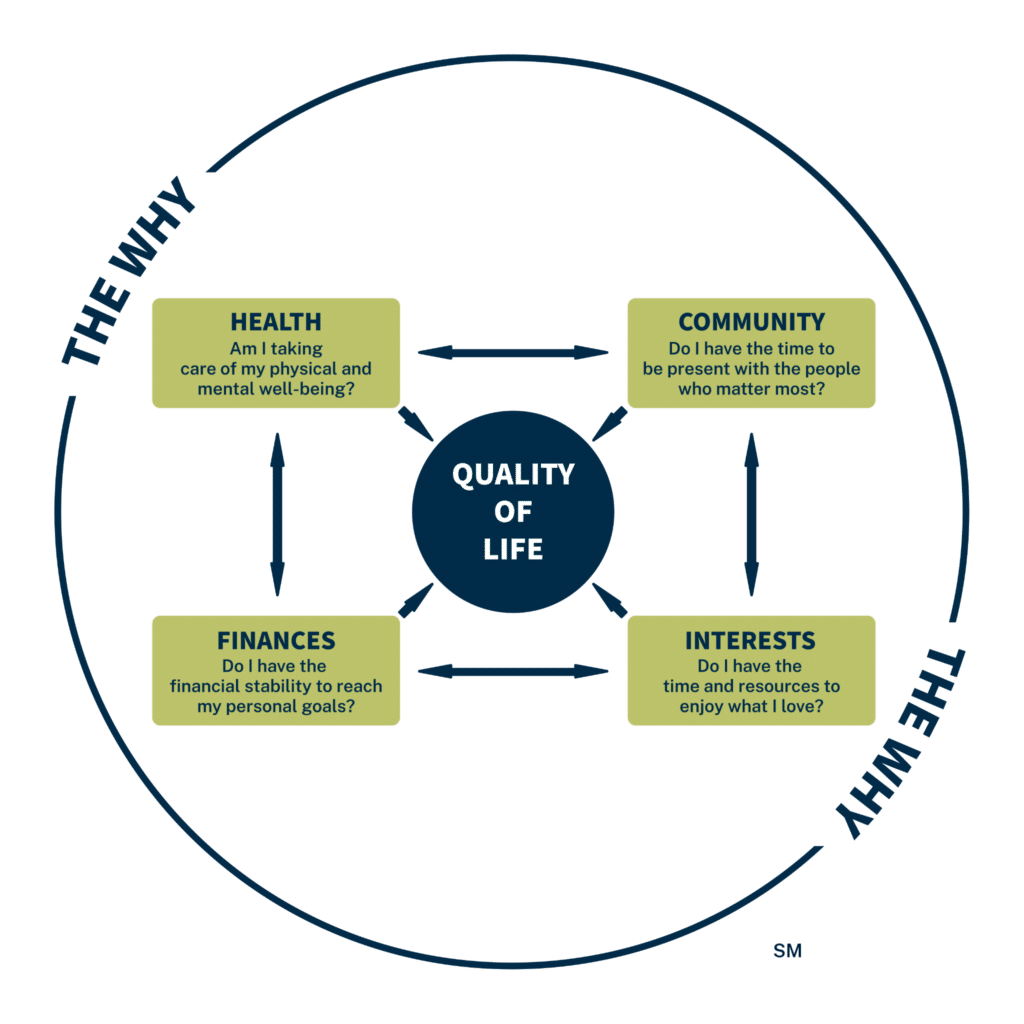
Remember to prioritize your own Portrait of Life so you can best show up for those around you:
Preparation is key
We’ve all heard the phrase, “Nothing is certain except death and taxes.” The deeper truth is this: life is unpredictable. Careers change. Health changes. Relationships change. Circumstances change. We can’t control uncertainty, but we can prepare for it. If you own a business, preparation isn’t pessimism — it’s responsibility.
Here are a few things every small business owner should consider putting in place before a crisis ever happens:
- Train and cross-train your team. At least two people should be able to handle every critical function.
- Develop a real succession plan. Not just for retirement, but for emergencies. What happens if you — or another key leader — are suddenly unavailable?
- Communicate the plan. A plan that lives only in your head doesn’t protect anyone.
- Have a notarized stamp of your signature that can be used if needed.
- Create a crisis resource list: attorneys, financial planners, accountants, crisis managers, therapists, and trusted advisors. It’s much easier to identify support before you desperately need it.
Preparation doesn’t eliminate pain, but it reduces chaos.
What if you haven’t prepared?
Sometimes a crisis comes without warning, and you realize you don’t have a playbook. There’s no perfect script to follow, but there are some smart first steps:
- Confide in one trusted person — a COO, attorney, or senior leader.
- Inform your team appropriately.
- Delegate more than you ever have before.
- Pause on major decisions or long-term commitments.
- Narrow your focus to only what truly matters. In most businesses, that means concentrating on:
- Cash flow
- Payroll
- Key client deliverables
- Legal or compliance deadlines
Everything else can wait.
You should also strongly consider outside support:
- A CPA for short-term cash planning
- An attorney if ownership or estate issues are involved
- A therapist or grief counselor
- A trusted business advisor to help make decisions and avoid reactive choices
Asking for help during a crisis isn’t weakness. It’s leadership.
Don’t rush back to “normal”
One of the biggest mistakes business owners make is trying to return to their previous workload too quickly after a personal crisis. Grief and recovery don’t operate on a business timeline. Consider coming back in phases:
Phase 1: One to two hours a day. High-level updates only. No heavy decisions.
Phase 2: Three to four hours a day. Begin meeting with key staff or clients. Handle lower-level decisions.
Phase 3: Return to your normal schedule — but only if you are physically, mentally, and emotionally ready.
Healing isn’t linear. Give yourself permission to move at a human pace.
Every crisis teaches you something
When you can finally see the worst of it in the rear-view mirror, take time to reflect. Ask yourself:
- Is this business too dependent on me?
- Did we have effective SOPs in place?
- Who stepped up as a leader?
- What did we learn about ourselves?
- What do I need to do differently moving forward?
Crisis reveals weaknesses — but it also reveals strength. Use what you learned to improve systems, clarify leadership, and build resilience into your company.
What to do if the owner can no longer run the business
This is one of the hardest realities to consider, but it must be addressed. If legal documents and contingency plans aren’t in place:
- Contact legal counsel immediately
- Determine whether the owner’s absence is short-term or long-term
- Establish signing authority for checks, contracts, and bank access
- Install an interim COO
- Stabilize finances:
- Protect payroll
- Confirm vendor payments
- Review debt obligations
- Freeze discretionary spending
- Communicate clearly with stakeholders:
- Acknowledge the situation without oversharing
- Emphasize stability and continuity
Remember: uncertainty erodes confidence faster than bad news. Transparency, when handled carefully, builds trust.
Your business can survive a family crisis
You don’t get to choose when a family crisis happens. But you do get to choose how prepared you are — and how you respond. The pain of the crisis itself may be overwhelming. It may shake you to your core. But with preparation, delegation, support, and intentional leadership, your business can survive. More importantly, you can survive. And in the end, the business exists to support your life — not replace it.