The Cogent Discovery
The Discovery is not a generic business report. It's an empowerment exercise.
Find out what the challenges are in your business, what those challenges are actually costing you, and what steps you can take to fix them.
No cost, no obligation. 15 minutes with a Cogent director. If your business is not a fit for a Discovery, we'll tell you on the call and explain why.

Is this you?
If you're a business owner, at least one of these will sound familiar.
You know there's another level.
The business works, but good is no longer enough. You're ready to know what the best companies in your industry do differently and what it would take to get there.
You want your life back.
Every decision waits on you. Somewhere along the way the company started running you. You're ready to find out what life would be like if the business ran without you (like it should).
You're working harder for less.
Revenue is up and profit is not. Everybody is busy and the margin is thin, and nobody has put the whole business in front of you at once.
You're thinking about the transition.
Selling, passing it to your kids, or building something that outlasts you. Most of what you walk away with is decided long before anybody makes an offer.
Where most of our clients sit
If you want validation, do not book a Discovery. We go into the books, the org chart, the floor, and the conversations your team has when you are not in the room. We have run this well north of $250 million. Below the line, we will tell you straight that a Discovery cannot pay for itself yet.
Actual Cogent client
"We learned more about our business in 2 days than we had in 20 years."
Austin KoonceVice President, Rigid Building Group
90 SECOND WATCH: what the Discovery showed Rigid Building Group
What actually happens
Information is everywhere. A Discovery goes beyond it.
Six phases, six proprietary exercises, 2 to 5 days on site, scheduled so the business keeps running. Every problem that surfaces gets a number attached to it, tested against your operations, and proven against your financials.
Phase 01 · Your reality
The opening conference
Closed door, equity ownership only, approximately two hours. You tell the analyst the good, the bad, and the ugly, where the bodies are buried, and what you want out of this business and why. Then you get back to work.
Phase 02 · Your key players
The team perspective
The analyst meets with your leadership, your managers, and the long-tenured people who influence company culture to get their ideas out on the table.
Phase 03 · Your operations
The workflow review
How work flows through the business, where communication breaks down, and what goes unnoticed from the owner's seat. Some of it will surprise you. Some of it will show your team how one area is affecting another.
Phase 04 · Your people
The anonymous culture survey
Company culture is a major indicator of success. We survey every employee, no names. They will tell us things they are not telling you. We look for patterns and report back, maintaining employee anonymity.
Phase 05 · Your numbers
The financial review
Your CPA reads your financials for compliance, looking backward. Your analyst reads them for opportunity, looking forward, including the ratios that drive the health and the valuation of your business.
Phase 06 · Your roadmap
The findings meeting
Closed door, equity ownership. This is the synopsis of everything the analyst has uncovered during the Discovery with a clear action plan to move forward. See below for major deliverables.
What you leave with
Five deliverables, built around your goals.
01
A customized action plan
Built from the goals you laid out, with a full synopsis of the organization against the Profit Platform® and recommendations for everything the Discovery uncovered.
02
Uncovered areas of opportunity
Most of them you can act on right away: a debt restructuring that frees up cash, a tax strategy nobody has put in front of you, something the culture survey turned up that never reached you.
03
Objective input on hard decisions
An experienced analyst with no emotional or financial stake in the business, sitting across from you on the decisions you have been carrying alone, telling you exactly what they would do and why.
04
An impact assessment
What the problems are actually costing you, proven by your numbers. Where the profitability gaps are, and what you're actually getting for your time, money, and attention.
05
Indication of value
An indication of what the business is worth today, and which parts of the operation are moving that number up or down. The same ratios that show the health of the business are the ones that set its value.
Who runs your Discovery
Another president's-eye view.
Imagine spending six months inside other people’s businesses. Sitting with different owners each week, walking the floor, going through the numbers, learning what makes that unique business tick.
You would come back knowing exactly what you wanted to do in your own business – and what you didn’t.
Your analyst has spent years doing exactly that. They have owned companies, led people, and made payroll in a bad month. They have worked with over 4,000 businesses and have the experience to tell you straight up what they would do in your shoes and why.
Click any analyst to read their background.
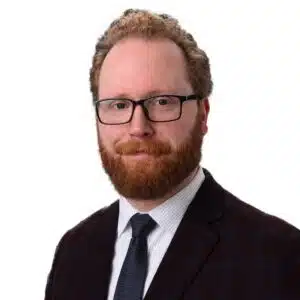
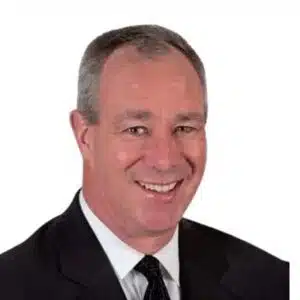



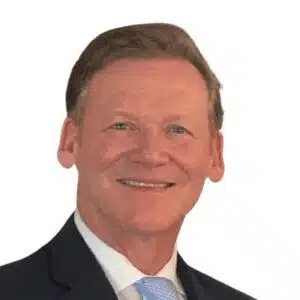
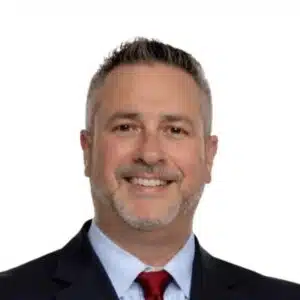



Kris Hart
Senior Business Analyst
Kris Hart brings a broad range of skills and over 20 years of experience to help small and midsize businesses thrive. He holds Bachelor's degrees in Business, Clinical Psychology, and Occupational Safety and Health, as well as an MBA.
Before joining Cogent, Kris oversaw Pole-to-Pole and Global flights in Private, Military, Medical and Charter operations, proving his ability to successfully coordinate complex, high-stakes initiatives. He is also a seasoned public speaker, sharing his insights on business growth and leadership with audiences nationwide.
Having sold multiple businesses during COVID, Kris finds it particularly rewarding to empower fellow entrepreneurs, especially those leading small American enterprises. He approaches every client relationship with unwavering dedication and optimism, leveraging his unique expertise to guide companies toward sustainable growth and lasting success.
Kevin Cummins
Senior Business Analyst
Kevin Cummins is a technology and operations leader with extensive experience spanning Fortune 500 companies, startups, and small to midsize businesses. He spent over 15 years in large-scale organizations with P&L responsibility exceeding $750 million before transitioning to the SMB space.
Kevin has built and scaled sales, consulting, services, and client experience teams across North America. As COO of a startup, he helped grow the business to over $17 million in recurring revenue, and later served as CEO of Batterii, leading it from concept to an enterprise platform used by more than 35 Fortune 1000 companies.
Kevin holds a Bachelor of Science from Miami University and master's degrees from UC Berkeley and Columbia University. He enjoys partnering with business owners to drive sustainable growth and long-term success.
Dave Drylie
Senior Business Analyst
Dave Drylie brings a uniquely diverse business background shaped by ownership and leadership across consulting, manufacturing, contracting, franchising, and franchisor organizations. He has over 16 years of consulting experience and has delivered training for dozens of trade associations, primarily in manufacturing and construction.
Dave has also taught business and franchising courses at the university level. His work with thousands of business owners has given him deep insight into the common challenges organizations face, and the practical strategies needed to overcome them.
He values real-world experience as much as formal education and leverages both to help business owners navigate growth, complexity, and change.
Chris Polvado
Senior Business Analyst
Chris Polvado is a business executive and strategic consultant with more than 25 years in leadership, operations, and business development. He works with small and midsize businesses to improve profitability, tighten up internal operations, and build growth they can actually sustain.
Before joining Cogent in 2021, Chris spent more than 14 years as a Regional Director with Thrivent and another 12 as an independent business analyst and consultant. His work centers on operations management, strategic planning, budgeting and forecasting, process improvement, and marketing strategy.
A servant leader by conviction, Chris believes accountability and clear communication are what actually move a company. He pushes owners and leadership teams to define their why, so the day-to-day decisions stay connected to where they are trying to go. He holds a Bachelor of Business Administration from Tarleton State University.
Arlon Albert
Senior Business Analyst
Arlon Albert brings over 25 years of experience as both a business owner and financial leader, working across manufacturing, construction, and distribution industries. He also spent a decade in senior financial management roles with Fortune 500 companies including Hertz and Waste Management.
Arlon has helped more than 1,900 small businesses identify management gaps, improve cash flow and profitability, strengthen organizational structure, and reduce tax exposure. His background spans financial management, business startups, sales and marketing systems, and leadership development.
He holds an MBA from Suffolk University with a focus on small business marketing and finance, a BS in Accounting from Fairleigh Dickinson University, and is a non-practicing CPA.
Monte Jump
Senior Business Analyst
Monte Jump is a people-first leader with over 20 years of executive experience serving as President, COO, and CMO in both large and small organizations. He has a proven track record of driving revenue growth while improving operational efficiency, and he understands firsthand the realities of business ownership as a former restaurant owner himself.
Most recently, Monte served as President of a Burger King franchise operating 43 locations, where he significantly increased profitability through operational and growth initiatives. His career includes senior leadership roles with brands such as Golden Corral, Crowne Plaza Hotels, Schlotzsky's, Backyard Burgers, and TGI Fridays, where he led major turnarounds, marketing transformations, and performance improvements.
Monte holds a Bachelor of Science in Chemical Engineering from the University of Tennessee and an MBA from Southern Methodist University with concentrations in marketing and finance.
Wade Rogers
Senior Business Analyst
Wade Rogers is a seasoned business mentor with more than 34 years of leadership experience, dedicated to helping business owners regain clarity and control of their organizations. After a successful corporate career, Wade founded his own consulting firm to focus on serving small and midsize businesses.
His expertise spans operations, sales, finance, and analytics, with experience across manufacturing, medical, food, industrial, and construction industries. Known for his relationship-driven approach, Wade works as an extension of his clients' leadership teams to drive meaningful results.
Outside of work, Wade enjoys the outdoors, fitness, boating, and cheering on Notre Dame and the Dallas Cowboys. He values time with his wife, children, and grandchildren.
Nick Stewart
Senior Business Analyst
Nick Stewart brings a rare blend of legal, operational, and human resources expertise to his work with business owners. He holds degrees in Business Administration, Human Resource Management, Law (JD), and an MBA, along with a Professional in Human Resources (PHR) certification.
Nick has held leadership roles in inventory management, insurance, and construction, with experience at organizations including RGIS, State Farm, and EY. He has successfully led multiple operational turnarounds through efficiency improvements, hiring and training enhancements, and leadership development.
He leverages his full-cycle leadership experience to help clients strategically align the Four Pillars of the Profit Platform and plan effectively for long-term success.
Andrew Acer
Senior Business Analyst
Andrew Acer is a Senior Business Analyst with Cogent Analytics. He has spent more than 15 years in advisory work with privately held business owners and has had more than 2,500 one on one conversations about their businesses across Construction, Manufacturing, Trucking and Logistics, Professional Services, and Wholesale Distribution.
Andrew grew up in a family that bought, built, and turned around companies, and he has been running businesses himself since he was a teenager. He and his wife own investment real estate and an elderly care company that uses in-home sensor technology to support seniors, along with their own privately held care home.
He holds a degree in Managerial Sciences from Georgia State University and was recently recognized as one of the Triad Business Journal's 40 Under 40. Andrew is a direct communicator who believes owners deserve the truth about their businesses, even when that truth is uncomfortable to hear.
Matthew Boos
Senior Business Analyst
Matthew Boos is a Senior Business Analyst at Cogent Analytics, where he partners with business owners to strengthen financial management, operational discipline, and leadership accountability. His background includes retail operations, data integration and analysis, corporate strategy, and business systems implementation.
Matthew helps clients turn complex financial and operational data into practical dashboards, performance measures, and repeatable management processes that support stronger profitability and sustained growth. He brings hands-on experience in project management, information systems, financial analysis, and organizational development.
Matthew holds an MBA from the Foster School at the University of Washington and a BA from Northwestern University, and is committed to helping entrepreneurs build more profitable, scalable, and robust businesses.
From owners who have been through it
Start here
It starts with a conversation.
Fifteen minutes with a Cogent director. You tell us what is going on in the business, and we tell you plainly whether a Discovery fits.
- 15 minutes, at a time you pick
- No cost and no obligation
- A straight answer on fit, either way
We are not asking you to decide anything. We are asking for the chance to show you what we can do.