Yes, your small business needs a strategic plan
Many small business owners assume simple strategic planning is something only large companies need. That belief quietly holds many businesses back. The truth is, small businesses are often in the best position to benefit from strategic planning because they can move faster, adjust quicker, and feel the impact of good decisions almost immediately.
Unlike large organizations, small business owners have direct control over what gets decided and what gets implemented. There are fewer layers, fewer politics, and far less red tape. When something works, you see it quickly. When something does not, you can change course without dragging the entire company through months of delay. It is much easier to turn a small car around than it is a fully loaded semi truck.
The challenge is not ability. The challenge is resources. Small business owners operate with limited time, capital, staff, and margin for error. Most owners know they need a plan. They do not know how or where to start.
Here are three foundational places to begin.
1. Change your relationship with learning
One of the biggest obstacles to strategic planning is not a lack of intelligence. It is resistance to outside input. Many owners built their companies by trusting their instincts, outworking competitors, and figuring things out on their own. Those same strengths can quietly become weaknesses when growth demands new levels of thinking.
Strong planners do not mindlessly follow advice, but they are willing to listen. They test ideas. They learn from others who have already made the mistakes they are trying to avoid. They also recognize that mistakes are not fatal unless they are repeated.
Poor planning is not failing once. Poor planning is failing the same way over and over while expecting a different outcome.
A strategic mindset assumes growth requires learning. Not once. Constantly.
2. Learn how to use your financials without letting them run you
Most owners fall into one of two camps. They either ignore the numbers and rely entirely on instinct, or they trust only the numbers and detach from what is happening on the floor, with customers, and with the team. Neither approach works long-term.
The financials are a tool. They are not the business.
When used correctly, your numbers give structure to your instincts. They confirm what is working, highlight what is drifting, and reveal risks before they turn into emergencies. At the same time, no financial report can replace real-world awareness of your people, your customers, and your operations.
Excellent planning lives in the balance between data and discernment. The numbers bring clarity. The owner brings perspective.
3. Build a circle of trusted advisors before you build the plan
Confident owners ask for help before they get stuck. They understand they do not need to know everything. They also understand that modern business is too complex for one person to master every function.
Smart owners gather insight from multiple angles. They listen to peers. They consult professionals. They involve key employees. They pay attention to customers. They learn from vendors. Then they take all that input and make informed decisions.
This is not a weakness. This is leadership.
No one builds a durable strategy in isolation.
Why simple strategic planning matters
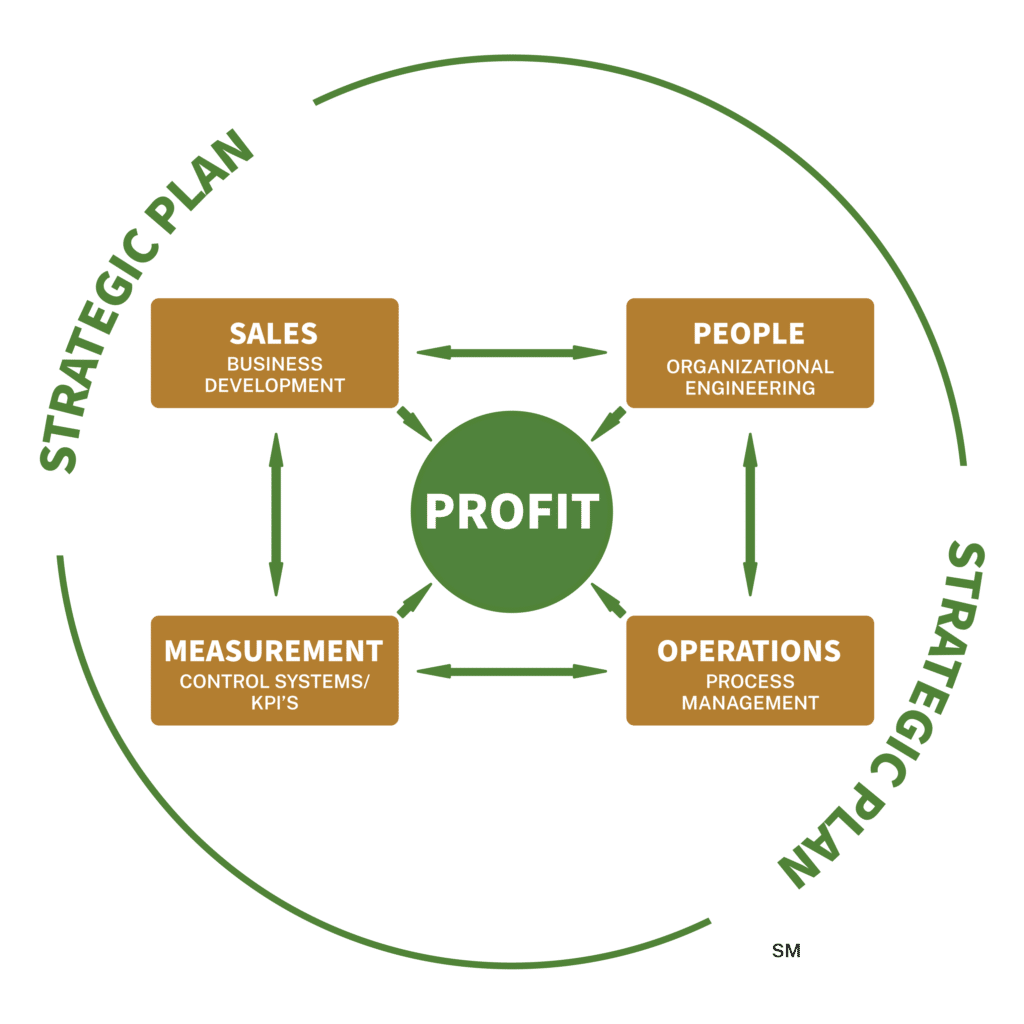
Strategic planning is not about building a perfect five-year forecast. It is about creating clarity, direction, and focus in a business that is constantly being pulled in a dozen directions at once.
When strategic planning is done well:
• Owners stop reacting and start leading
• Resources are allocated with purpose
• Teams understand where the business is going
• Decisions become easier and faster
• Growth becomes intentional instead of accidental
The process takes effort. It takes honesty. It takes discipline. But so does everything else that actually works in business.
Once it is in place and functioning, most owners say the same thing: “I don’t know why I waited so long to do this.”